Saturday, April 28, 2007

Fort Lewis exploring Port of Grays Harbor to ship military equipment

Fort Lewis helicopters pay a visit to Port of Grays Harbor (Aberdeen) to explore viability for use in shipping military cargo. That's a bit closer to home for me, in fact Grays Harbor is just up the road a piece from where we live in neighboring Pacific County. Wonder what the residents in the area think about their port becoming a shipping route for military equipment?

I would imagine there will be those who welcome the commerce; those who are maritimers already and see it as a natural extension of Port activity; those who could use a job at the Port, even if it's a temporary job; those who have fundamental objections to the Iraq war; those who have loved ones in Iraq or going to Iraq and a belief the equipment is needed for troops use in Iraq should ship without interruption; those who have a premise that ports should not become 'militarized'; and then those who just don't really think much one way or the other about it.

I'm mindful of the International Longshore and Warehouse Union (ILWU) attempts to register as Labor against the Iraq war; March 2005; The local International Longshore and Warehouse Union will protest the war in Iraq and the deadly cuts it has forced by holding a stop-work meeting, shutting down all Bay Area ports on Saturday, the second anniversary of the Iraq war. It will then lead the labor contingent in the anti-war march in San Francisco under its banner, "An injury to one is an injury to all."


More locally though, in Washingon state, have been the Port Protesters who have staged protests at Port of Olympia in May 2006 - (see article Washington Post) , and Port of Tacoma last month, March 2007 (see article in Tacoma News Tribune). One has to wonder if next in the news will be a protest of Port of Grays Harbor (Port of Aberdeen)..stay tuned.


Article in the Aberdeen Daily World, Friday, April 27, 2007;

Why the choppers?

Friday, April 27, 2007 10:52 AM PDT

DAILY WORLD / LOUIE TRAUB Military personnel prepare a “Blackhawk” helicopter for take-off from the Port of Grays Harbor on Thursday. It was one of five choppers from the 4-6 Air Cavalry Squadron from Fort Lewis that landed at Terminal 4 near The Home Depot.
Five Army helicopters caused quite a stir as they descended from the drizzly sky and landed at the Port of Grays Harbor’s Terminal 4 near the Aberdeen Home Depot Thursday.

The choppers from Fort Lewis were on a training exercise and also came to inspect the Port facilities for possible future use in shipping military cargo.

The Port has no details on what might be shipped or when, according to its executive director, Gary Nelson. He said the military told him it wants to explore shipping options, and he directed the Port staff to begin making contingency plans.

Local law enforcement agencies have been working with the Port on possible security backup for Port personnel and are developing a response plan in the event military shipments draw anti-war protesters.

The helicopters — including OH-58 “Kiowa” light observation helicopter and a UH-60 “Blackhawk” combat assault chopper — were from the 4-6 Air Cavalry Squadron.

“They were conducting routine operations to prepare for future use of the Port,” said Catherine Caruso, a public affairs specialist at Fort Lewis. “For operational security reasons we don’t discuss future movements, locations or timelines.”

The helicopters were on the ground for about two hours and provided an opportunity for the Aberdeen Fire Department to get some hands-on training with equipment it rarely sees, Nelson said.

“The training was primarily focused on extrication techniques for pilot and crew members, in addition to orientation of fuel and power shutoff systems, as well as special firefighting precautions related to helicopters,” Fire Chief Dave Carlberg said.


DAILY WORLD / LOUIE TRAUB A “Kiowa” light observation chopper takes off on Thursday.

Friday, April 27, 2007

"Our generals are not worthy of their soldiers." says Lt. Col. Paul Yingling

Lt. Col. Paul Yingling is quoted 'Our generals are not worthy of their soldiers' in an article he wrote published in the Armed Forces Journal today. And while the article he writes has much else to say and so does Washington Post article citing his article -- I couldn't agree more with this one statement from Lt. Col. Paul Yingling. And I thank him for his courage to say it.

I am utterly in astonishment and awe of our young troops who valiantly face deployment after deployment to Iraq in a never ending revolving door that recycles the same uniformed men and women over and over again. Utterly astonished at their amazing courage while (generally speaking) the country that sent them there from citizen to Congress to the 'Civilian' Administration that sent them into war exercises something akin to cowardice, apathy, lack of respect, disregard, callousness, or just flat out an ignorance of the situation at hand.

But let's don't hear from me; let's hear from Lt. Col. Paul Yingling in his article 'General Failure' published today in Armed Forces Journal.


ARMY LT. COL. PAUL YINGLING is deputy commander, 3rd Armored Calvary Regiment. He has served two tours in Iraq, another in Bosnia and a fourth in Operation Desert Storm. He holds a master's degree in political science from the University of Chicago.


Likely I'll post Lt. Col Paul Yingling's article here, but today it is better read where he has it published in the Armed Forces Journal.

Washington Post gives a review of his article;

Army Officer Accuses Generals of "Intellectual and Moral Failures"
By Thomas E. Ricks
The Washington Post

Friday 27 April 2007

An active-duty Army officer is publishing a blistering attack on U.S. generals, saying they have botched the war in Iraq and misled Congress about the situation there.

"America's generals have repeated the mistakes of Vietnam in Iraq," charges Lt. Col. Paul Yingling, an Iraq veteran who is deputy commander of the 3rd Armored Cavalry Regiment. "The intellectual and moral failures . . . constitute a crisis in American generals."

Yingling's comments are especially striking because his unit's performance in securing the northwestern Iraqi city of Tall Afar was cited by President Bush in a March 2006 speech and provided the model for the new security plan underway in Baghdad.

He also holds a high profile for a lieutenant colonel: He attended the Army's elite School for Advanced Military Studies and has written for one of the Army's top professional journals, Military Review.

The article, "General Failure," is to be published today in Armed Forces Journal and is posted at http://www.armedforcesjournal.com. Its appearance signals the public emergence of a split inside the military between younger, mid-career officers and the top brass.

Many majors and lieutenant colonels have privately expressed anger and frustration with the performance of Gen. Tommy R. Franks, Lt. Gen. Ricardo S. Sanchez, Lt. Gen. Raymond T. Odierno and other top commanders in the war, calling them slow to grasp the realities of the war and overly optimistic in their assessments.

Some younger officers have stated privately that more generals should have been taken to task for their handling of the abuses at Abu Ghraib prison, news of which broke in 2004. The young officers also note that the Army's elaborate "lessons learned" process does not criticize generals and that no generals in Iraq have been replaced for poor battlefield performance, a contrast to other U.S. wars.

Top Army officials are also worried by the number of captains and majors choosing to leave the service. "We do have attrition in those grade slots above our average," acting Army Secretary Pete Geren noted in congressional testimony this week. In order to curtail the number of captains leaving, he said, the Army is planning a $20,000 bonus for those who agree to stay in, plus choices of where to be posted and other incentives.

Until now, charges of incompetent leadership have not been made as publicly by an Army officer as Yingling does in his article.

"After going into Iraq with too few troops and no coherent plan for postwar stabilization, America's general officer corps did not accurately portray the intensity of the insurgency to the American public," he writes. "For reasons that are not yet clear, America's general officer corps underestimated the strength of the enemy, overestimated the capabilities of Iraq's government and security forces and failed to provide Congress with an accurate assessment of security conditions in Iraq."

Yingling said he decided to write the article after attending Purple Heart and deployment ceremonies for Army soldiers. "I find it hard to look them in the eye," he said in an interview. "Our generals are not worthy of their soldiers."

He said he had made his superiors aware of the article but had not sought permission to publish it. He intends to stay in the Army, he said, noting that he is scheduled in two months to take command of a battalion at Fort Hood, Tex.

The article has been read by about 30 of his peers, Yingling added. "At the level of lieutenant colonel and below, it received almost universal approval," he said.

Retired Marine Col. Jerry Durrant, now working in Iraq as a civilian contractor, agrees that discontent is widespread. "Talk to the junior leaders in the services and ask what they think of their senior leadership, and many will tell you how unhappy they are," he said.

Yingling advocates overhauling the way generals are picked and calls for more involvement by Congress. To replace today's "mild-mannered team players," he writes, Congress should create incentives in the promotion system to "reward adaptation and intellectual achievement."

He does not criticize officers by name; instead, the article refers repeatedly to "America's generals." Yingling said he did this intentionally, in order to focus not on the failings of a few people but rather on systemic problems.

He also recommends that Congress review the performance of senior generals as they retire and exercise its power to retire them at a lower rank if it deems their performance inferior. The threat of such high-profile demotions would restore accountability among top officers, he contends. "As matters stand now, a private who loses a rifle suffers far greater consequences than a general who loses a war," he states.


Thursday, April 26, 2007

A few things - Iraq; the mission changes yet again; false counting of decrease violence in Iraq

From another blogger Minstrel Boy who seems to share the focus theme specific to Iraq war.


U.S. excludes bombs in touting drop in Iraq violence "WASHINGTON — U.S. officials who say there has been a dramatic drop in sectarian violence in Iraq since President Bush began sending more American troops into Baghdad aren't counting one of the main killers of Iraqi civilians."

Car bombs and other explosive devices have killed thousands of Iraqis in the past three years, but the administration doesn't include them in the casualty counts it has been citing as evidence that the surge of additional U.S. forces is beginning to defuse tensions between Shiite and Sunni Muslims.


Air Force Pinched by Iraq Ground War "WASHINGTON — The Air Force's top general expressed frustration on Tuesday with the reassignment of troops under his command to ground jobs for which they were not trained, ranging from guarding prisoners to driving trucks and typing."

Gen. Michael Moseley, the Air Force chief of staff, said that over 20,000 airmen have been assigned worldwide into roles outside their specialties.


ePluribus Media Community This Is Your Brain On Iraq: "Paul Thurman was not supposed to be deployed. His brain had been damaged before he even left Ft. Bragg; a training accident in which a log was dropped on his head. Brain scans showed evidence of lesions. Yet, inexplicably, he was sent to Iraq.

There he sustained a second head trauma; another training accident. An IED simulator went off three feet from his head."

His company sent him to Landstuhl Army Regional Medical Center in Germany, where the doctors, he said, told him he shouldn't have been deployed to Iraq. They forwarded him on to Walter Reed Army Medical Center in Washington, where he said he spent "eight hours with the USO ladies eating cookies" before being packed off to Fort Carson. He said he was not examined while at Walter Reed.


Training Iraqi troops no longer driving force in U.S. policy: "WASHINGTON - Military planners have abandoned the idea that standing up Iraqi troops will enable American soldiers to start coming home soon and now believe that U.S. troops will have to defeat the insurgents and secure control of troubled provinces. "

Training Iraqi troops, which had been the cornerstone of the Bush administration's Iraq policy since 2005, has dropped in priority, officials in Baghdad and Washington said.

Soldier's ticket out of Iraq may backfire

Spc. Joel Trainor is a 22-year-old combat medic from Seattle who spent a year in Iraq. He returned home weary of bloodshed and eager to avoid a return trip that would separate him from his wife and infant daughter.

So in February, Trainor re-enlisted in the Army for three more years.

That might seem like an odd way to try to stay out of the war. But Trainor believed re-enlistment was the only way to avoid an involuntary extension of his contract that would send him back to combat. Re-enlistment officers told him re-upping would allow him to transfer to a job at Fort Lewis, he said.

"Absolutely, if I had a choice, I would have gotten out of the Army this year," said Trainor, whose initial contract with the military was set to end this September. "That wasn't going to happen."

In recent weeks, Trainor has learned that he may wind up back in Iraq after all.

His commanders with the 101st Airborne Division at Fort Campbell in Kentucky told him his battalion is short of medics, and they've balked at signing his transfer to Fort Lewis.

Trainor's story offers an unusual window into wartime re-enlistments. Cash bonuses, education benefits and other incentives have helped the Army meet or exceed re-enlistment quotas that are crucial to maintaining troop strength.

For some, another powerful motivator is the desire to avoid a return to war. Sometimes, the only way to do that is to re-up for another stint in the Army, and thus gain a transfer out of an Iraq-bound unit.

In his battalion of 700 soldiers, Trainor says, he can count about a dozen such transfers.

Army officials confirm that some soldiers who don't want to return to Iraq have re-enlisted to try to gain a transfer to other posts. "There's nothing dishonorable about wanting to keep serving, but not necessarily to serve there [in Iraq]," said Master Sgt. Terry Webster, a Fort Campbell public-affairs officer.

Army policy

Trainor returned from his initial tour in Iraq last September and was looking forward to leaving the Army.

He wanted to sample life as a University of Washington pre-med student. He also relished the chance to spend more time with his wife, Sarah, who had suffered two strokes before giving birth to their daughter, Lorelei.

But he was trapped by an Army policy, known as "stop-loss," that requires soldiers to remain with a unit that is within 90 days of deployment overseas.

Under the policy, thousands of soldiers have served in Iraq beyond the number of years that they originally contracted to serve in the Army. For many, the extension might be months; for others it may be a year or more.

The Army maintains that the stop-loss policy is essential to fielding cohesive units during war. Critics call it a back-door draft that violates the spirit of a volunteer Army.

Trainor learned that his unit was scheduled to return to Iraq this summer, and realized stop-loss would require him to join them for another 12- to 15-month tour of duty.

Until a few weeks ago, Trainor thought he had found a way to avoid war duty by re-signing for a bonus of almost $11,000 and selecting a transfer to Fort Lewis.

After discussions with re-enlistment officers at Fort Campbell, Trainor believed he could transfer to Fort Lewis this spring, so long as he signed his new service contract before Feb. 22. At the new post, Trainor believed, he could work in a stateside job for at least another year.

Then, in early March, Trainor got word from the re-enlistment officers that too many soldiers were leaving his battalion. That made him subject to another Army policy known as "stop-move" — meaning his transfer would not go through.

Trainor felt betrayed. The Army taught the importance of honor, and he believed that respecting a verbal agreement was the honorable thing to do.

"It [the transfer] wasn't chiseled in stone, but that was the guidance that I was given," Trainor said. "I expect that if somebody is going to make that sort of claim, they are going to back it up. I wasn't told that by some punk kid with no rank."

Some written contracts, such as Trainor's, state a new post of service and authorize the soldier the right to stay there for at least 12 months. However, they do not guarantee when the transfer will take place, according to a copy of Trainor's contract.

The contract appears to allow for his redeployment to Iraq, and then a later transfer to Fort Lewis.

Army officials say those contracts — not verbal assurances — carry the most weight.

"It depends case by case, and — of course — if the soldier looked at the fine print in the enlistment contract, the needs of the Army trump everything else," said Lt. Col. Bryan Hilferty, a Pentagon spokesman.

Officials say they have met more than 130 percent of the re-enlistment goals for the 101st Airborne Division at Fort Campbell. Most of these soldiers have opted to stay with the unit.

The officials acknowledge that credibility is an important element of successful re-enlistment efforts. Trainor's concerns — and his transfer request — remain under review, according to Lt. Col. Ed Loomis, a Fort Campbell public-affairs officer.

Trainor's mother, Judi Trainor, of Seattle, has written letters to the Washington congressional delegation and phoned Fort Campbell re-enlistment officers to plead for the transfer.

"Last week, they finally cut me off and said they couldn't talk to me anymore," Judi Trainor said.

Trainor, a physical therapist, said she fretted so much during her son's deployment that she was unable to hold down a job. She stayed at home, awaiting the moments when she could instant-message her son.


By Hal Bernton
Seattle Times staff reporter

March 29, 2007

read more | digg story

Wednesday, April 25, 2007

Timeline for Peace Activism - Begin to End Vietnam War - Now Iraq War into 5th year and how long will it take to end this one?

from website: A Timeline of Peace Activism

1950

Korean War begins


1952

First hydrogen bomb tested by United States


1953

Korean War ends with cease-fire armistice


(My Note; notice a mere two years from ending Korean War, U.S. begins sending Advisors into Vietnam)


1955

28 protesters, including Dorothy Day and A.J. Muste, refuse to participate in national civil defense drill

U.S. advisors sent to Vietnam to train South Vietnamese army


1957

Committee for Non-Violent Action founded by members of War Resisters League and Catholic Worker Movement

Linus Pauling, Homer Jack and Norman Cousins form the Committee for a Sane Nuclear Policy (SANE)


1958

CNVA member Albert Bigelow sails Golden Rule into area of scheduled H-bomb tests. After Bigelow’s arrest, Earle Reynolds sails The Phoenix into testing site.


1959

President Eisenhower initiates moratorium on atmospheric testing

Campus-based Student Peace Union formed


1960

Students for a Democratic Society (SDS) founded by Tom Hayden and Al Haber

CNVA organizes grassroots protest in New London, CT against the Polaris nuclear submarine

20,000 people attend SANE rally for nuclear disarmament at Madison Square Garden

U.S. troop level in Vietnam: 900


1961

Bella Abzug and Dagmar Wilson found Women Strike for Peace

Physicians for Social Responsibility formed in response to atmospheric nuclear weapons testing and the threat of nuclear war

East Germans build Berlin Wall (August)

Kennedy delivers speech on national television warning that nuclear war could break out at any time

CNVA organizes San Francisco-to-Moscow Walk for Peace

U.S. troop level in Vietnam: 3,200


1962

SDS publishes the Port Huron statement

Linus Pauling wins the Nobel Peace prize for his efforts toward nuclear disarmament

Soviets shatter 3-year moratorium on atmospheric testing of nuclear weapons with series of tests (Autumn)

Cuban Missile Crisis (October)

SANE places new advertisement calling for test ban; featured photograph of famous baby doctor Benjamin Spock and caption "Dr. Spock is worried"


1963

Soviet Union and United States sign partial test ban treaty (July)

First protest against American involvement in Vietnam is organized by Thomas Cornell, a Catholic Worker member in New York City

John F. Kennedy assassinated (Nov. 22)

U.S. troop level in Vietnam: 16,300


1964

Catholic Peace Fellowship formed. Founders include Catholic activists Daniel and Philip Berrigan, Martin Corbin, Thomas Cornell and James Forest

Peace activists, including Joan Baez, David Dellinger and the Berrigans, hold a rally to protest the Vietnam war in Washington DC

The May 2 Movement formed among students at Yale University to protest American involvement in Vietnam

Gulf of Tonkin Resolution passed almost unanimously by Congress; opens way for massive U.S. intervention in Vietnam

U.S. troop level in Vietnam: 23,000


1965

Phil Ochs releases "I Ain't Marching Anymore"

Viet Cong attack at Pleiku; LBJ orders heavy reprisal attack of North Vietnam (February)

LBJ orders sustained bombing of North Vietnam -- Rolling Thunder operation (March)

First "teach-in" on U.S. involvement in Vietnam held at the University of Michigan, Ann Arbor (March)

SDS sponsors national antiwar demonstration in Washington DC; 20,000 attend (April)

First major confrontation at Ia Drang Valley; General Westmoreland requests vast increase in troop strength (October)

Augustus Stanley mass-produces "acid"

Norman Morrison immolates himself in front of Pentagon (November)

Roger LaPorte immolates himself in front of United Nations building (November)

SANE sponsors anti-war demonstrations in Washington DC (November)

U.S. troop level in Vietnam: 184,300


1966

Senator J. William Fulbright holds televised hearings to call attention to Vietnam policy (February)

Start of massive B-52 attacks on North Vietnam (April)

Clergy and Laymen Concerned about Vietnam (CALCAV) founded; William Sloane Coffin executive secretary (April)

SANE organizes "National Voters Peace Pledge"; plan to end war through local politics

LBJ requests 10% tax surcharge to pay for war (June)

First national anti-Vietnam "Mobilization" committee formed; holds protests

U.S. troop level in Vietnam: 385,300


1967

Martin Luther King, Jr. makes opposition to war in Vietnam public

A.J. Muste dies at age 82 (February)

Draft resisters "We Won’t Go" groups begin to form on campuses around country

Spring Mobilization to End the War in Vietnam (Spring Mobe) forms; holds dual rallies in New York City and San Francisco (April)

Vietnam Veterans Against the War founded (June)

Spring Mobe becomes permanent organizing committee; holds massive rally in Washington DC; Yippies and others try to "levitate" Pentagon (Oct. 15)

National draft-card turn-ins (October, December)

Antiwar critic Sen. Eugene McCarthy (D-Minn) announces bid for Democratic nomination for president (November)

Another Mother for Peace organization founded

U.S. troop level in Vietnam: 485,600


1968

Justice department indicts five prominent advocates, including Dr. Benjamin Spock and William Sloane Coffin, of draft resistance on conspiracy charges (January)

Viet Cong and North Vietnamese launch Tet Offensive (January)

General Westmoreland requests 200,000 more troops

Robert F. Kennedy enters race for Democratic nomination (March)

LBJ announces bombing cessation; calls for negotiations; announces that he will not run again for president (March)

Martin Luther King, Jr. assassinated in Memphis, TN (April)

Catonsville Nine raid draft board in Maryland (May)

Robert Kennedy assassinated in Los Angeles (June)

Televised clashes between antiwar protestors and Chicago police outside the Democratic Convention (August)

Richard M. Nixon elected president on platform to "win the peace" in Vietnam (November)


1969

Nixon orders secret bombing raids of Cambodia (March)

Chicago Seven, including Tom Hayden, Abbie Hoffman, Jerry Rubin and David Dellinger, tried on conspiracy to riot for roles in Chicago; turn trial into circus

National antiwar conference in Cleveland, New Mobe founded (July)

Woodstock festival (August)

Weatherman’s Days of Rage in Chicago (October)

Vietnam Moratorium protests across the country (October); Moratorium leadership made up of SANE members and "Get Clean for Gene" students

My Lai massacre reported in press for first time (November)

New Mobe demonstrations in Washington DC and San Francisco (November)

U.S. troop level in Vietnam: 541,000 (highest of war)


1970

Nixon orders U.S. troops into Cambodia; in response, hundreds of colleges and universities closed by demonstrators (April)

National Guardsmen fires upon demonstrators at Kent State University; 4 students killed, 9 wounded (May)

Congress repeals Gulf of Tonkin Resolution but continues to fund war appropriations

George McGovern-Mark Hatfield measure calling for withdrawal of all American troops by end of 1971 narrowly defeated in Senate

Vietnam Veterans Against the War hold mock "search-and-destroy" demonstrations (September)

Nixon announces withdrawal of 40,000 U.S. troops from Vietnam (December)


1971

Invasion of Laos begins (February)

"Set the Date Now" campaign launched by peace advocates (February)

Nixon announces withdrawal of another 100,000 troops (April)

New York Times begins publishing Pentagon Papers (June)


1972

Nixon announces mining of North Vietnam’s ports and intensified bombing (May)

Nixon crushes Democratic candidate George McGovern (60.7% to 37.5%, every state except Massachusetts) to win reelection

Nixon and Soviet president Leonid Breznev sign a Strategic Arms Limitation Treaty (SALT I); severe limits of antiballistic missiles and freeze on deployment of intercontinental ballistic missiles

Christmas Bombings: Heaviest bombings of war; round-the-clock B-52 raids on Hanoi-Haipong (December)


1973

Henry Kissinger and North Vietnam’s Le Duc Tho sign Paris Peace Accords (January)

Last U.S. troops leave Vietnam (March)


How many names of troops killed in Vietnam are on the Vietnam Memorial ? 58,253.

How many total were deployed in Vietnam over the span of the entire Vietnam war?

My note; in this Iraq war it is not fresh, new recruits, but the revolving door with the same troops deploying over and over again to Iraq; 2 times, 3 times or more. And when they are not deploying to Iraq they may be deploying to Afghanistan.

I heard the news today -- Iraq

Voices from the Military Families on Iraq


A Letter from a Military Wife

My husband has been in the military for four years. He joined for reasons probably very similar to the rest of the people he serves with. We were young, newly married, with a baby on the way. Every time he thought he was going to get a decent job, it ended up being a dead end.


Recommended Viewing

America At a Crossroad-Part 1( A MUST SEE SERIES)

PBS-America At A Crossroad-Please click here to watch the series I am posting this entry today because this is something you should all go and read/watch. It will give you a better understanding of what our American Soldiers are facing on a daily basis being deployed to Iraq to fight for a country that doesn't want us there and are killing our troops on a daily basis. Below is a detailed description of what the show consists of and information about each show aired. America at a Crossroads is a major public television event premiering on PBS in April 2007 that explores the ...

Bill Moyers on Why the Press Bought the Iraq War

The media took the Bush administration's Iraq claims at face value, but it didn't have to. Bill Moyers Journal: "Buying the War" will broadcast on PBS on Wednesday, April 25, 2007 at 9:00 p.m.
(check local listings - www.pbs.org/moyers).

The marketing of the war in Iraq by the administration has been much examined, but a critical question remains: How and why did the press buy it? The new Bill Moyers Journal documentary from PBS explores these very questions.

Bill Moyers and his team piece together the reporting that shows how the media were complicit in shaping the "public mind" toward the war, and ask what's happened to the press's role as skeptical "watchdog" over government power. This segment features the work of some intrepid journalists who didn't take the government's word at face value, including the team of reporters at Knight Ridder news service whose reporting turned up evidence at odds with the official view of reality.


Sundance channel airing two great dvds - one we know about =
'Ground Truth' and if you haven't yet seen 'Sir! No Sir!' then I'd like to recommend it - highly.

http://www.sundancechannel.com/schedule/

On Monday May 7th 2007...there will be an historic night of GI resistance on national television as the Sundance Channel presents the U.S. broadcast premiere of both.


Sir! No Sir!
Monday, May 7
The Sundance Channel
9 pm Eastern
8 pm Central
7 pm Mountain
6 pm Pacific


The Ground Truth
Monday, May 7
The Sundance Channel
10:30 pm Eastern
9:30 pm Central
8:30 pm Mountain
7:30 pm Pacific

*******************

This is a wonderful chance for millions of people to see these films that, together, link the tremendous movement of American soldiers against the Vietnam war with the growing opposition
among soldiers to the Iraq war today.


Voices from U.S. Labor on Iraq


Troop Mobilizations

National Guard (In Federal Status) And Reserve Mobilized As Of April 25, 2007

News Releases are official statements of the Department of Defense.

My Note:All U.S. Army troops to have Extended Deployments. Can you say 'Stop Loss'? Can you say 'Back Door Draft'? Can you say 'Involuntary Military'?

Three Months Tacked Onto All Army Combat Deployments

From VOA: The U.S. Defense Department announced Wednesday that most of the U.S. army troops now in Iraq and Afghanistan and other parts of the Middle East and East Africa will have their assignments extended from 12 months to 15 months, and that the longer tours of duty will apply to soldiers who deploy to the region for the foreseeable future. VOA's Al Pessin reports from the Pentagon the move


Memorials

More soldiers from Fort Lewis killed in Iraq; Memorials at Fort Lewis, Washington state

Memorials

By Ken Swarner on Fort Lewis

FORT LEWIS, Wash. (I Corps Release) -- A memorial ceremony for Cpl. Michael Mathew
Rojas and Cpl. Wade James Oglesby will be held Tuesday, April 24 at 2:30
p.m. in the Main Post Chapel, where they will be remembered by family,
friends, Soldiers and the Fort Lewis community.


Memorial

By Ken Swarner on Fort Lewis

FORT LEWIS, Wash.(I Corps release) -- A memorial ceremony for Sgt. Larry R. Bowman
will be held Thursday, April 19 at 2:30 p.m. in the Main Post Chapel.

More Memorials

9 Fort Bragg Families Told of 82nd Airborne paratroopers deaths in Iraq

Officials at Fort Bragg, N.C., met Tuesday with the families of paratroopers killed a day earlier in Iraq. A truck bomb claimed the lives of nine members of the Army's elite 82nd Airborne Division, based at Fort Bragg.


Wounded Soldiers - Broken VA Medical Care Services


Eight Thousand Soldiers with Traumatic Brain Injuries

Iraq war brain trauma victims turn to private care

Opinion: Proactive Community Needed to Help Troops Reconnect, Reintegrate

From the Spring Grove [MN] Herald: I am watching the growing furor over the shortcomings in the Veterans Administration system and the fallout from Walter Reed Army Hospital with growing alarm. I am concerned that we are going to fix the crisis and forget the problem. The problem is how to help warriors, and their families, successfully reintegrate back into our communities, and their homes

Family 'Respectfully Disagrees' With VA Report on Son's Suicide

From the Associated Press: [Iraq vet Jonathan] Schulze had made at least 40 visits to the VA hospital in Minneapolis, where doctors diagnosed him with post-traumatic stress disorder, the report said. But it said mental health workers at the St. Cloud hospital told investigators Schulze never mentioned suicide to them, and they would have taken it seriously if he had. “The report and story has

U.S. News & World Report: More Evidence That Military Downgrading Disability Ratings

The evidence keeps piling up: U.S. military appears to have dispensed low disability ratings to wounded service members with serious injuries and thus avoided paying them full military disabled retirement benefits. While most recent attention has been paid to substandard conditions and outpatient care at Walter Reed Army Medical Center, the first stop for many wounded soldiers stateside


Lead Ft. Lewis Army Lawyer: Military Stacks Deck Against PTSD, TBI-injured Troops

Lots of articles, for good reason, coming out on the topic exploring the issue of troops not getting a fair shake when going through their disability claims processing; I recently was asked to contribute some background material on an upcoming piece for the Tacoma News-Tribune. This latest piece, from Military Times, also concerns troops at Washington state's Fort Lewis: The Army disability


Army made video warning about dangers of depleted uranium but never showed it to troops

David Edwards
Published: Tuesday February 6, 2007


A special investigation on the effects of depleted uranium reveals the Army made a tape warning of the effects of depleted uranium which was never shown to troops despite the fact the Pentagon knew the agent to be potentially deadly, CNN reports Tuesday.

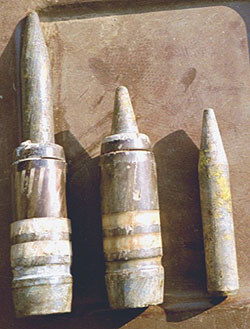
Depleted uranium -- or DU -- was used in the Gulf War as a projectile that could penetrate tank armor. A group of soldiers are suing the US government because they are sick from exposure; despite the unshown video, the Army denies that depleted uranium represents a serious health risk.

CNN reporter Greg Hunter explains. The soldiers "report similar ailments. Painful urination, headaches and joint pain. They say Army doctors blame their symptoms on post traumatic stress. We showed them a tape the Army made in 1995, a tape the Army never distributed. It warned of potential D.U. hazards. The army's expert on D.U. training concedes some information contained on the tape is true. For instance, radioactive particles can be harmful."

A doctor who once investigated DU for the Army now believes that the health risks are serious.

"In the 1990s this doctor studied D.U. health effects for the U.S. military," Hunter says. "Now a private researcher, he says his own test of these veterans showed abnormally high levels of D.U. this their urine and that those levels pose a serious health threat."

"One doctor... calls it, quote, 'a radiological sewer,'" Hunter adds. "The Army adamantly denies that."


Depleted Uranium: Poisoning Our Planet

Depleted Uranium used in weaponry of U.S. troops - NOT depleted, in fact, radioactive and causes radiation poisoning illnesses. Veteran Activist Dennis Kyne speaks at Portland State University in Portland, Oregon. Link to article and video.

Troop Resistance

Army Raises 2006 Desertion Figure by 1,000

From the Pasadena Weekly: [T]he US Army has revised its count of active duty soldiers who have deserted the military, raising that figure by almost 1,000 for fiscal year 2006 alone. Until the new figures were released on March 23, it had been widely reported that the number of deserters and soldiers absent without leave, or AWOL, had been decreasing since the start of the Iraq War except for a


Politically Speaking


Kucinich introduces impeachment resolution against Cheney

Raw Story reports that late today Dennis Kucinich submitted House Resolution 333 which sets out three "deeply researched" charges against Vice President Dick Cheney. The articles of impeachment and supporting documents are on Kucinich's site. Here's the transcript of his press conference in a Washington Post article.

House Set to Vote on Compromise War-Funds Bill

Gen. David Petraeus visits Capitol Hill Wednesday as the House of Representatives prepares to vote on a measure that will directly affect his mission in Iraq. The bill would both fund the war and set a timetable for U.S. withdrawal.


Bush Repeats Threat to Veto Iraq Spending Bill

Speaking at the White House, President Bush repeats his threat to veto an Iraq war spending bill that includes a timetable for the withdrawal of United States troops from Iraq. Congressional Democrats agreed Monday to a bill that would require troops to begin leaving Iraq on Oct. 1.


Friday, April 20, 2007

Soldier's Choice - Court Martial instead of Mental Health Services

First it was the horrors of Iraq. Now, Rob Withrow is locked in a fight with his own Army superiors. He wants mental health treatment -- they want him to face a court-martial

Broken Warrior, One Soldier's Struggle

article in Seattle PI
Broken Warrior: One soldier's struggle

Saturday, April 14, 2007

By CAROL SMITH
P-I REPORTER

Rob Withrow was a good soldier until he got back from combat duty in Iraq.

Now by his own admission, he is no longer anyone's idea of a model fighting man. He screwed up, and he's screwed up -- an assessment the Army would agree with.


But that's where their agreement ends.

Withrow wants mental health treatment. He has tried to commit suicide four times since returning from Iraq. He has been hospitalized in Madigan Army Medical Center's inpatient psychiatric unit on multiple occasions and is currently on a cocktail of antidepressants and psychoactive drugs. He is a month out of treatment for an addiction to narcotic pain pills that he began taking to "numb out" the month he returned from Iraq and he does not fit the Army's new criteria for deployment.

But now the Army wants to redeploy him to Iraq, and court- martial him over there. The charges stem from his pattern of not showing up on time, or sometimes at all.

Withrow's case raises questions about how the Army handles soldiers with psychiatric illnesses, particularly PTSD and depression and whether discipline, or the threat of it, interferes with treatment.

Since his return from Iraq in November 2004, Withrow has received multiple Article 15s -- the Army's form of non-judicial punishment -- for disciplinary issues related to "patterns of minor misconduct." He's been reduced in rank from sergeant to private.

If he is discharged for misconduct, he will lose benefits for his family, which is already facing a financial crisis related to his demotions.

"I'm not going to candy coat it," Withrow said. "I'll take responsibility for my part. I have purposefully not gone to work."

At the time, medical records show he was struggling with depression, anxiety and post-traumatic stress disorder. He repeatedly informed doctors that he was late or absent to work because he was having difficulty waking up, in part because of powerful sedatives prescribed for sleep disturbances.

Still, prosecutors have indicated their intent to court-martial him in Iraq, said Capt. Geoff Deweese, Withrow's defense attorney.

"I think it would be absurd for them to do that," Deweese said. "You don't bring someone with this kind of instability to a combat zone and risk harm to himself or others."

Culture clash?

The military's handling of mental health problems has come under intense scrutiny after an increase in the number of soldier suicides in Iraq in 2005. According to the Army's most recent Mental Health Advisory Team Findings, the suicide rate was 19.9 per 100,000 soldiers in 2005, up from the year before. That review led to new mental health screening policies and more stringent criteria for sending soldiers to war with pre-existing mental health diagnoses.

"Severe mental disorders, such as schizophrenia, bipolar disorder and severe depression, preclude deployment," Col. Elspeth Ritchie, the Army Surgeon General's Consultant on Psychiatry, said in an e-mail. "Soldiers may not deploy on a variety of types of medication, to include lithium, antipsychotic agents, and anticonvulsant agents."

But for soldiers such as Withrow, the reality after they return from deployment is that behavior stemming from mental health problems can result in disciplinary action rather than treatment.

The Army does offer several ways to provide psychological help for soldiers and is in the midst of testing a number of new programs to improve resiliency. Soldiers go through an extensive evaluation two to three months after their return to gauge adjustment back to life on the base and to spot any emerging health issues -- physical or mental -- said Fort Lewis spokesman Joe Piek. The Army also offers confidential help lines and other mental health counseling.

But the military culture, and sometimes the symptoms of depression itself -- fatigue and despair -- can still make it difficult for soldiers to find and benefit from treatment, said Dr. Jonathan Shay, Boston-based author and psychiatrist who specializes in combat stress injuries.

"What you have is a military that's not set up to care for these soldiers," said Tod Ensign, attorney and director of Citizen Soldier, a non-profit veterans advocacy group that has represented a number of soldiers with mental health histories who are being charged with misconduct. The Army, under pressure to keep its troops eligible for re-enlistment, discourages treatment that would deem them undeployable, he said.

If a soldier does seek treatment, often in tandem with discipline issues that stem from PTSD or other disorders, the Army's preference is to discharge them for misconduct or for having pre-existing mental conditions, either of which would reduce the burden on the Veterans Affairs medical care system, Ensign said.

Withrow said when he first tried to get help, he felt like he was getting the runaround. So he gave up.

When his symptoms were bad enough for him to go to the emergency room, he did receive help. But his symptoms persisted, despite treatment. At the same time, he began having trouble in his unit with a commander he perceived as unsympathetic.

Withrow and his lawyer contend that if he had gotten the right help at the appropriate time, his situation never would have escalated.

Withrow says he wanted to stay in the Army. In the midst of all his turmoil, he pleaded to be reassigned to his original battalion in the 3rd Brigade, 2d Infantry Division, which he knew would be going to Iraq again. (It deployed last July.)

"They said they would welcome me back, even knowing everything that was going on," said Withrow.

Now he wants a discharge on the best terms possible for himself and his family. Instead, he is facing a court-martial.

Born on the Fourth of July

Withrow, 27, was born in Gettysburg, Pa., on the Fourth of July. He enlisted in the Army and headed to boot camp 20 days after graduating high school in June 1997. A field artillery sergeant, he planned to make the military his life's work.

In November 2003, he went to Iraq with the 1st Battalion, 35th Field Artillery Regiment. When he returned a year later, he received an Army Commendation Medal for "Exceptionally meritorious service as an air guard during operation Iraqi Freedom."

Prior to returning from Iraq, he had no disciplinary record and consistently received good-conduct medals, his attorney confirmed. A memorandum from his first sergeant with his old brigade noted, "I would gladly serve with SPC Withrow in combat again because I believe him to be a true Warrior."

Tall and lean with trimmed dark hair, Withrow is personable and straightforward while relaying his story, but bluish circles under his brown eyes betray fatigue. In addition to his legal and health problems, he is facing bankruptcy and loss of his base housing. He worries frequently out loud about what will become of his wife and three children if he goes back to Iraq. "I don't want them to wind up on the street," he said.

"When he got back, I could tell he was just different," said Jenny Withrow, his wife of six years.

Like many of his comrades, he said he had images from Iraq burned into his brain -- a mass grave with still decomposing men's bodies layered over women's and children's, fresh bullet holes in his Humvee.

"I would lay in bed at night and wonder if this is the night I get blown up," he said.

Adjusting to life back home wasn't what he expected. He had left when his baby girl was 4 months old.

"When I got back, my daughter -- it's like she didn't know me," he said.

Other guys gravitated to alcohol, he said. "I gravitated to opioids. All I wanted to do is be numb."

In May 2005, short on non-commissioned officers, the Army transferred Withrow to a different unit. But he didn't click with his new command and missed the soldiers he had deployed with. "We were like family," he said. His depression worsened and he started having difficulty waking. He began showing up at the ER with problems breathing from panic attacks. In August 2005, he was diagnosed with PTSD as well as depression and anxiety.

He was also late reporting to work on a number of occasions.

Instead of recommending him for mental health treatment, however, he was threatened with an Article 15 -- a demotion. "They said fix your issues, or we'll take your stripes," Withrow said.

At his request, the Army did switch him to a different battery for a fresh start in September 2005. But the second day with that unit, he woke late again. He said that the night before, he laid in bed and contemplated killing himself.

Distraught, he first tried to cut his wrists. He then tried to drive straight into a tree at full speed with his seat belt off. He swerved at the last possible moment, he said.

"I drove myself straight to the ER instead," he said.

He was admitted to the psychiatric ward and stayed four days before being discharged to full duty, with the understanding he would go through a two-week outpatient behavioral health program.

His commander picked him up from the hospital and offered him a chapter discharge "nice and quiet," but Withrow, who had put in nearly nine years, wasn't ready to give up the Army.

The scope of the problem

Estimates of the number of soldiers who suffer from PTSD and mental problems vary, but most experts agree that the nature of the fighting in Iraq sets up soldiers for psychological trauma.

According to Ritchie of the Surgeon General's Office, an estimated 15 to 17 percent of deployed soldiers experience PTSD and 23 percent experience other behavioral health problems. Others put the numbers higher.

According to a study published last month in the Archives of Internal Medicine, nearly one-third (31 percent) of 103,788 veterans who had served in Iraq and Afghanistan were diagnosed with mental health or psychosocial problems upon their return.

The Surgeon General's Office indicated about 11 percent of soldiers who have returned receive mental health diagnoses.

For Withrow, as his mental anguish grew, his problems with his commanders intensified.

"If I were his commander, I'd be frustrated with him as well," said Deweese, who has also worked as a prosecutor.

At the end of March, Withrow was informed he would deploy this week with the 4th Brigade, 2nd Infantry Division back to Iraq.

As part of predeployment screening, an Army psychiatrist specified his "symptoms are not stable" and indicated he should have "no access to weapons or ammunition, no exposure to combat situations, no exposure to casualties, and was not recommended for deployment."

The issue of whether to send him to Iraq for a court-martial is still pending.


P-I reporter Carol Smith can be reached at 206-448-8070 or carolsmith@seattlepi.com.
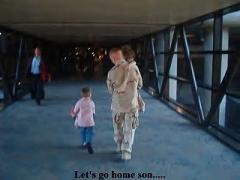
President George W. Bush's statement in March 2006 after 3 yrs of war "a future President will have to resolve war in Iraq"


LinkWithin

Related Posts with Thumbnails